Chile approves anti-deepfake law
Chile’s lower house approved a bill on deepfakes, with fines, mandatory labels and a 72-hour takedown rule.
Chile’s Chamber of Deputies approved in general a bill that regulates AI-generated content and specifically penalizes deepfakes, with 128 votes in favor, 2 against and 5 abstentions. The initiative returns to the Committee on Future, Science, Technology, Knowledge and Innovation and calls for fines of 5,000 to 10,000 UTM, removal within 72 hours and mandatory labeling of AI-generated content.
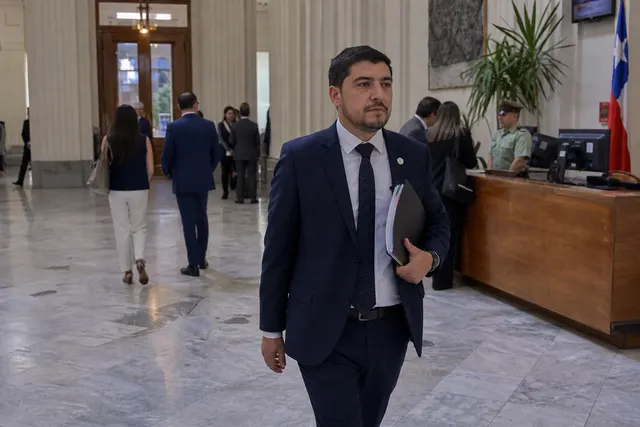
Chile’s Chamber of Deputies has approved, in general terms, a bill that regulates content generated with artificial intelligence and specifically targets deepfakes, with 128 votes in favor, 2 against and 5 abstentions. The measure, promoted by lawmaker Gael Yeomans, now returns to the Committee on Future, Science, Technology, Knowledge and Innovation for further debate.
What would the Chilean proposal change?
The bill creates a right to digital integrity over a person’s image, body and voice, and it requires platforms to label AI-generated content. It also says reported material must be removed within a maximum of 72 hours and requires operators to have a legal representative in Chile.
The proposal includes fines ranging from 5,000 to 10,000 UTM and would place enforcement in the hands of the future Personal Data Protection Agency. According to analysis published by Mundo en Línea, the 72-hour deadline is designed as a rapid response standard to reputational harm, while the legal-representative requirement is meant to make sanctions easier to enforce against global platforms.
Who would the regulation apply to?
According to Mundo en Línea’s technical note, the rule would cover individuals, companies and social networks in general. The same source says the labeling requirement for AI-created content explicitly excludes private messaging.
The Chilean outlet also reported that the right to digital integrity would extend beyond death. In that case, heirs could take action if the image, body or voice of a deceased person were recreated with AI without authorization.
What does the rest of the regional agenda show?
Chile is not the only country in the region with active digital policy initiatives. In Mexico, lawmaker Alberto Martínez Urincho introduced a proposal in the Mexico City Congress to add Articles 6 Bis and 6 Ter to the Federal Political Constitution, with the goal of guaranteeing people’s right to live in a safe digital environment.
The Mexican proposal also seeks to require the state to ensure digital literacy at every level of education, establish civil, administrative and criminal liability for platforms and digital service providers for harm to biopsychosocial development, and require stronger protections for minors to be enabled by default. It also adds a mandate that the development and use of AI be subordinated to human dignity and democratic values.
At the same time, the Committee on Future, Science, Technology, Knowledge and Innovation in Chile’s lower house unanimously approved the idea of legislating another bill, made up of four motions, aimed at protecting children from digital risks and online content under the new Data Protection Law.
Paraguay is debating the bill "De protección de la infraestructura crítica" in the Senate while also holding a public hearing on a 17-article cybersecurity law introduced by Senator José Oviedo on December 4, 2024. The hearing was limited by last-minute changes to the text that had not been shared.
In Ecuador, the plenary of the National Assembly considered the nonbinding report on the partial objection to the Organic Bill for the Strengthening of Cybersecurity and approved the related resolution motion, so the text remains under review. Panama, meanwhile, has kept Bill No. 14 on artificial intelligence regulation in review status since 2023, and it is not yet a binding law.
Paraguay also appears in two regional AI policy compilations. One says the country adopted a National Artificial Intelligence Policy in 2024 based on UNESCO’s readiness assessment and has AI bills in Congress. Another adds that Paraguay’s 2024 personal data protection law applies to data processing by AI systems.
Mexico, finally, has had a General Cybersecurity Policy for the Federal Public Administration in force since December 2025, published in the Official Gazette, and it already operates as binding regulation for federal agencies while a future General Cybersecurity Law is being prepared. A regional report links it to digital risk management obligations and incident reporting aligned with standards such as NIS2. It also notes that Colombia, Chile and Peru are subject to new obligations of that kind, although with bills and frameworks still in process.
Sources
- Protección de nuestros niñoslatercera.com· La Tercera
- Regulación de ciberseguridad 2026: España, Colombia y ...proactivanet.com· Proactivanet
- Chile's Law 21.719: What Changes for Marketingvanlookstudio.com· Vanlook Studio
- Se debe garantizar derecho de las personas a un entorno digital segurocdmx.info· CDMX Magacín
- Delay or pause? 10 practical considerations regarding the postponement of Law 21,719covarrubias.legal· Covarrubias y Cía. Abogados
- Ley de Protección de Datos en Chile podría aplazarse hasta 2027: usuarios esperan mayor control sobre llamadas y ofertas comercialespublimicro.cl· Publimicro
- Senado tratará “infraestructura crítica” en su sesión ordinariaultimahora.com· Última Hora
- La paradoja del freno a la Ley de Datos Personalesmundoenlinea.cl· Mundo en Línea
- Ley de Datos Personales: los cinco pasos que las empresas deben abordar antes de su entrada en vigenciag5noticias.cl· G5 Noticias
- Panama AI Regulation Overviewregulations.ai· Regulations.ai
- AI regulation in Paraguay: laws, status and deadlinesaipolicytracker.org· AI Policy Tracker
- 72 horas para borrar una mentira: así operaría la Ley antideepfakes de Chilemundoenlinea.cl· Mundo en Línea
- Gobierno Ingresa Proyecto De Ley Que Posterga En Un Año Entrada En Vigencia De La Ley 21.719 Sobre Protección De Datos Personalesmondaq.com· Mondaq
- 72 horas para borrar una mentira: así operaría la Ley antideepfakes de Chileg5noticias.cl· G5 Noticias
- Prórroga de la Ley de Datos abre un año clave para que empresas preparen su cumplimientopublimetro.cl· Publimetro Chile
- Resumen ejecutivo Sesión 082-AN-2025-2029 sobre Proyecto de Ley Orgánica para el Fortalecimiento de la Ciberseguridadarchivo.asambleanacional.gob.ec· Archivo Asamblea Nacional de Ecuador
- La paradoja del freno a la Ley de Datos Personalesportalinnova.cl· Portal Innova
- 72 horas para borrar una mentira: así operaría la Ley antideepfakes de Chilemundoenlinea.cl· Mundo en Línea
- Ley 21.719: obligaciones para empresas y multas | Ley 21.663: Ley Marco de Ciberseguridadsaytec.cl· Saytec