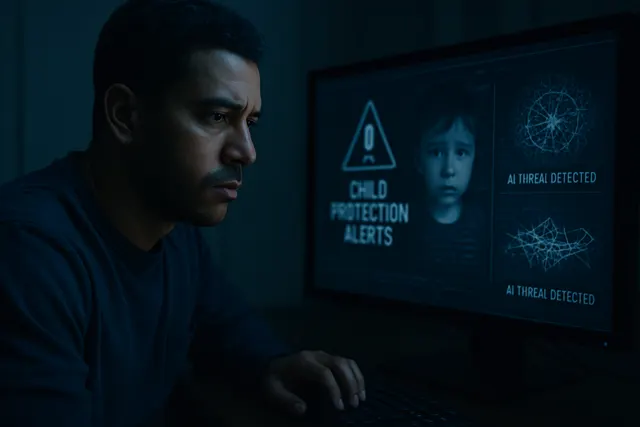
Brazil toughens penalties for child digital abuse
Brazil raised penalties from 4 to 10 years for sexual violence against children and teens online, with harsher sentences if shared on social media.
Brazil raised penalties from 4 to 10 years for producing, reproducing, filming or selling sexual violence content involving children and adolescents, with an added one-third increase if it is spread online or on social media. The law also adds aggravating factors for artificial intelligence, deepfakes and fake profiles.
Update Aug. 21, 2026: the note adds that the Federal Senate approved Bill No. 2,338/2023 as a substitute and sent it to the Chamber of Deputies. It also adds that the new law raises the sentence from 4 to 10 years for producing, reproducing, filming or selling and exposing that content, with an increase of one-third if distribution happens over the internet or social media.
What changed under the new law
Brazil's Chamber of Deputies and Senate approved Bill No. 3,066/2025, and President Luiz Inácio Lula da Silva signed it during a ceremony at the Palácio do Planalto. The measure became Law 15,487/2026 and is aimed at tightening criminal penalties for sexual crimes against children and adolescents committed in digital environments.
The law adds aggravating factors when the acts involve artificial intelligence, deepfakes or fake profiles. According to Brazil's Ministry of Justice and Public Security, the new law establishes measures to combat and suppress sexual violence against children and adolescents, including in digital settings and with the use of artificial intelligence.
Scope of the new framework
The Brazilian government also said the law amends five legal frameworks, the Penal Code, the Criminal Procedure Code, the Child and Adolescent Statute, the Heinous Crimes Law and the Criminal Organizations Law.
G1 reported that the approved bill authorizes a so-called virtual roundup to strengthen the prosecution of crimes committed against children and adolescents on the internet. Poder360 said the text adds aggravating factors for the use of AI, deepfakes and fake profiles.
The update also expands punishment for conduct tied to the production and circulation of material depicting sexual violence against minors. According to JC/UOL, the new law raises the sentence from 4 to 10 years for producing, reproducing, filming or selling and exposing that content, and adds a one-third increase when distribution occurs through the internet or social media.
Legislative process
According to Brazilian press coverage, the bill was introduced in June 2025, passed by the Chamber in May 2026 and cleared by the Senate on July 7, 2026. Agência Brasil reported that the presidential signing took place after that legislative path and confirmed the tougher penalties for sexual crimes against children and adolescents in digital settings.
According to the Federal Senate, Bill No. 2,338/2023 was approved as a substitute and sent to the Chamber of Deputies. That legislative reference is added to the package of changes already turned into law and does not alter the presidential sanction reported by the government and Brazilian media.
The debate over digital regulation in Brazil remains open in Congress. TELETIME said the AI framework was not on the Senate's agenda, although it could come up in the first half of August if there were political agreement. The same coverage added that, in the Chamber, economic regulation of major digital platforms remained among the topics closest to a possible vote, with urgency already approved.
Sources
- Governo Lula endurece penas de crimes digitais contra criançaspoder360.com.br· Poder360
- Lula sanciona projeto que aumenta penas para crimes cometidos contra crianças e adolescentes na internetg1.globo.com· G1
- Lei que aumenta punição a crimes digitais contra crianças é sancionadaagenciabrasil.ebc.com.br· Agência Brasil
- O que esperar dos esforços concentrados no Congressoteletime.com.br· TELETIME News
- Presidente Lula sanciona projeto com medidas de repressão à violência sexual contra crianças e adolescentes na internet e com uso de IApejornal.com.br· Primeira Edição
- PL 2338/2023 - Senado Federalwww25.senado.leg.br· Senado Federal do Brasil
- Lei que aumenta punição a crimes digitais contra crianças é sancionadajc.uol.com.br· JC/UOL
- Soberanía de datos es opción de elección, no obligación dice Ascentybnamericas.com· BNamericasUnverified URL
- Lula sanciona lei que aumenta combate à violência contra crianças e adolescentes na internetitatiaia.com.br· Rádio Itatiaia
- Nova lei amplia medidas de combate à violência sexual contra crianças e adolescentes no ambiente digitalgov.br· Ministério da Justiça e Segurança Pública do Brasil
- PL 2338/2023 - Senado Federalwww25.senado.leg.br· Senado Federal do Brasil