PCDF Busts Deepfake Donation Fraud in Brazil
Brazil’s Federal District Civil Police broke up a group accused of raising nearly R$10 million with fake donation campaigns.
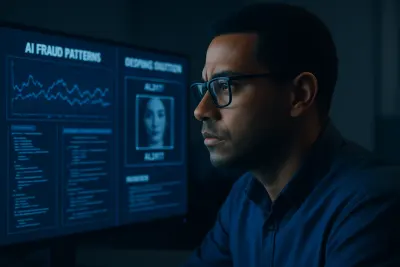
The Federal District Civil Police broke up a criminal organization suspected of raising nearly R$10 million through fake donation campaigns online. According to investigators, the group used AI-generated videos, including deepfakes of Gusttavo Lima, Marcelo Rossi and Fábio de Melo, to send victims to pages that mimicked legitimate charity drives.
The Federal District Civil Police has broken up a criminal organization suspected of raising nearly R$10 million through fake donation campaigns online. According to the force, the group used artificial intelligence, including deepfakes, to produce fake videos of Gusttavo Lima, Marcelo Rossi and Fábio de Melo, then redirected users to pages that imitated legitimate charity drives.
How did the scheme work?
Police investigations indicate the suspects used AI-manipulated videos to push people into making financial transfers. The materials featured public figures, but also images of vulnerable people, with the goal of building empathy and speeding up donations, according to O Globo and G1.
G1 also reported that the group used artificial intelligence to create videos of fake elderly people, children and people with serious illnesses. The tactic was meant to move victims emotionally and lead them to donate to pages that imitated real solidarity campaigns.
What amounts did the investigation attribute?
The PCDF attributed nearly R$10 million to the group, an estimate tied to the investigation and not a judicially confirmed figure. Diário do Centro do Mundo reported, based on the police probe, that a company linked to the scheme received 215,575 transactions totaling R$9,839,087.73 in 45 days.
Metrópoles also reported that the PCDF identified 66 police incident records in the Federal District tied to companies flagged as recipients of funds linked to electronic fraud. That figure broadens the geographic scope police observed in the case.
What other cases show AI use in Brazil?
That same day, the Ministry of Science, Technology and Innovation released a separate case of AI use in cybersecurity. The Hackers do Bem program presented a system developed by the GT-MALWARE DATALAB at the Federal University of Pampa to generate synthetic data for training malware detection tools.
The initiative also combines data anonymization, classification through language models and automatic generation of playbooks and training paths. In this case, AI is being used to support defense, while in the PCDF investigation it appears as a tool for scaling fraud.
Sources
- Soluções do Hackers do Bem avançam da pesquisa à aplicação práticagov.br· Ministério da Ciência, Tecnologia e Inovação do Brasil
- Grupo é suspeito de usar IA para criar falsas campanhas beneficentesg1.globo.com· G1
- Polícia do DF prende grupo que usava deepfakes de Gusttavo Lima e dos padres Marcelo Rossi e Fábio de Melo para golpesoglobo.globo.com· O Globo
- PCDF prende grupo que usava deepfakes de famosos em falsas doaçõesdiariodocentrodomundo.com.br· Diário do Centro do Mundo
- Golpe de R$ 10 milhões: quadrilha usava IA de famosos e para pedir doaçõesmetropoles.com· Metrópoles
- PCDF desmantela grupo que aplicava golpes com uso de IAcorreiodamanha.com.br· Correio da Manhã