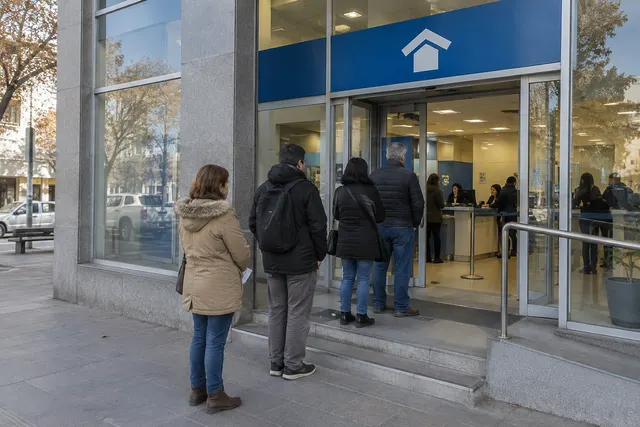
Chubut court fines Banco Hipotecario
A court in Chubut ordered Banco Hipotecario to pay 20 million pesos over a digital fraud tied to SIM duplication and a loan.
A court ruling in Chubut ordered Banco Hipotecario to pay 20 million pesos over a digital fraud. The case involved a client’s phone line being duplicated, a preapproved loan for 547,944 pesos, and transfers from her account, with the bank found to have breached Central Bank Communication A 7319.
A court ruling in Chubut ordered Banco Hipotecario to pay 20 million pesos over a digital fraud that involved a client’s phone line being duplicated, a preapproved loan for 547,944 pesos, and transfers from her account. According to the coverage, the court found that the bank failed to comply with Central Bank Communication A 7319 by not properly verifying the customer’s identity after changes to contact information.
What did the courts say in the Banco Hipotecario case?
The court held the bank responsible for identity verification failures and imposed a 20 million peso penalty. The case, reported by Hola Salta, linked the fraud to the customer’s phone line change and to later transactions that led to a loan and unauthorized transfers.
The report also said the preapproved loan amounted to 547,944 pesos. It added that the ruling was based on the bank’s failure to comply with Central Bank Communication A 7319, a rule that requires stricter checks when a user’s contact details change.
What other banking frauds were reported in Argentina?
El Cronista reported a separate case in which a user handed over her username and token key after receiving instructions by phone, and three transfers totaling 2.8 million pesos were later completed. In that case, the court found the bank had not put in place adequate mechanisms to verify the user’s identity or flag unusual activity.
At the same time, authorities in Chubut were preparing a prevention campaign against new cybercrime schemes. Among them, they mentioned fake investment platforms that use artificial intelligence and the takeover of Gmail accounts to try to reach banking services and digital wallets.
The official recommendation was to enable two-factor authentication and never share security codes. That advice aligns with another regional report from ESET Latin America, which identified at least nine fraudulent ads in Gmail between May and September 2026. Those messages promoted a supposed investment platform and tried to get victims to hand over money.
According to PressPeru, ESET recommended contacting the bank or payment provider immediately, preserving evidence, and filing complaints with UFECI and the CNV. The sequence of cases points to a repeated pattern: identity spoofing, compromised contact channels, and transfers or investments driven by fake messages.
What happened with public agency data?
Perfil reported the arrest of a group of hackers accused of stealing sensitive data from Argentine public agencies, including PAMI and RENAPER, and selling it. The material provided does not specify the exact date of the activity or the full scope of the information taken, but it places the case within an investigation into access to and commercialization of state data.
That case comes amid a landscape where financial scams and personal data leaks often overlap. In the reported incidents, the initial access may come through a duplicated phone line, a compromised Gmail account, or a deceptive phone call, and then lead to unauthorized banking transactions.
Sources
- Cómo enfrentar un ciberataque: las claves de Mastercard para responder cuando cada segundo cuentacronista.com· El Cronista
- Preocupa el aumento de los ciberdelitos y preparan una campaña de prevención ante nuevas modalidades de estafaelchubut.com.ar· El Chubut
- Banco Hipotecario: condenan a pagar 20 millones por una estafa digitalholasalta.com· Hola Salta
- Notas sobre Hackersperfil.com· Perfil
- ESET analiza una estafa de inversión que utiliza medios falsospressperu.com· PressPeru