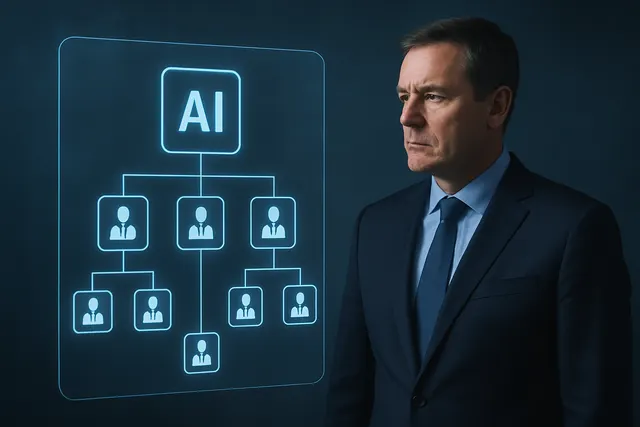
Argentina Senate sets human oversight for AI firms
The Senate advanced a company law reform that would require a human or legal responsible party for automated structures
Argentina’s Senate advanced debate on the overhaul of the General Companies Law with a concrete political decision: the governing bloc said automated companies, including DAOs, must have at least one human or legal responsible party. The discussion is still in committee and has not been approved.
Argentina’s Senate moved ahead with debate on the overhaul of the General Companies Law and narrowed the room for fully automated structures, after the governing bloc said automated companies, including DAOs, must have at least one human or legal responsible party. The discussion remains in committee and has not been approved.
What changes for automated companies?
The position adopted by the governing bloc requires these organizations to have a human person or a legal entity accountable for them. That rules out entities with no human participation, according to El Argentino Diario’s coverage of the legislative process.
At the same time, Patricia Bullrich said the goal will be to make the responsibility of automated companies "much more rigid, with physical responsible parties," according to Infobae. The political signal points to stricter requirements for human presence in the management of these AI-based structures.
Where does the legislative debate stand?
The reform is being discussed in the General Legislation Committee of the upper house, chaired by Senator Nadia Márquez. According to Infobae, about 14 speakers have been invited in recent meetings to weigh in on the regime for automated companies, DAOs, and other proposed changes.
The bill promoted by the executive branch is not limited to AI-linked structures. It also seeks to modernize the corporate regime through digitized procedures, such as digital ledgers and remote meetings, as well as simpler filings before public registries and fewer preventive state controls, reinforcing the autonomy of the partners, according to Crónica.
What other objections and support have emerged?
Academic organizations specializing in corporate law called for a "deep and broad debate" on the reform, citing concerns over the scope of the proposed flexibility and the need for stronger state oversight and liability safeguards, according to La Nación.
Coverage also noted that the bill submitted to the Senate on June 1 creates two unprecedented figures in Argentine law. One is automated companies, which carry out their corporate purpose through autonomous algorithmic systems or AI agents without employees under labor contracts. The other is decentralized autonomous organizations, or DAOs, which operate through smart contracts and blockchain records, according to elDiarioAR.
MOBU Market News placed the reform within a broader governing agenda aimed at harmonizing regulations, eliminating obsolete corporate forms, and attracting capital through greater autonomy for the parties and safeguards for majorities and minorities. iProUP added that there is already at least one Argentine company that says it operates almost entirely through AI, although legal responsibility still rests with a human person or company, with forensic traceability of algorithmic decisions as a key point for resolving disputes.
What other data and compliance bills are moving in parallel?
In the Chamber of Deputies, another bill introduced recently proposes transparency, disclosure, and accountability standards for actors that offer financial products and services, including transactions through digital platforms, plus the creation of a Financial Users Ombudsman within the body the executive branch designates as the enforcement authority. The initiative is in an early stage of debate, according to iProfesional.
Along the same lines, Deputy Martín Yeza introduced a bill to create a Single Banking Profile linked to digital identity in the MiArgentina app. The proposal seeks to centralize information on financial products, credit history, and each person’s behavior, and make it easier to move between institutions, with direct implications for data protection and compliance in digital financial services, according to Rosario3 and Ecos365.
Sources
- La IA sin control, frenada en el Congreso: cómo el Senado modificó el proyecto sobre sociedades automatizadaselargentinodiario.com.ar· El Argentino Diario
- Los otros intereses de Peter Thiel tras desembarcar en Vaca Muertaeldiarioar.com· elDiarioAR
- Nueva reunión por el Súper RIGI en el Senadoinfobae.com· Infobae
- "Mi empresa funciona sola": el testimonio del primer argentino con una sociedad operada por IAiproup.com· iProUP
- El Senado retomó el debate para reformar la Ley de Sociedadescronica.com.ar· Crónica
- Reforma de Sociedades y Super RIGI: la agenda legislativa del oficialismonews.mobu.market· MOBU Market News
- PBU: qué propone el Gobierno para centralizar bancos y billeteras en 'MiArgentina'rosario3.com· Rosario3 / Ecos365
- La Casa Blanca prepara una cumbre cripto antes del debate de la Clarity Act en el Senadoiprofesional.com· iProfesional
- Sin acuerdo para dictaminar, el Senado continúa el debate por Sociedades y Súper RIGIinfobae.com· Infobae
- Deudas y cobranzas: qué plantea el nuevo proyecto de ley sobre usuarios financierosiprofesional.com· iProfesional
- El Senado retomó debate sobre reforma de la Ley de Sociedades con foco en automatización y menor tutela estatalnoticiasargentinas.com· Noticias Argentinas
- Argentina Data Protection & Privacy Regulation Monitordataprotection.gi· GDPRI / DataProtection.gi - Argentina Data Protection & Privacy Regulation Monitor
- Academias de derecho piden un “profundo y amplio debate” sobre la reforma de la Ley de Sociedadeslanacion.com.ar· La Nación
- Deudas: buscan prohibir llamados a familiares y mensajes intimidatorios de los cobradoresiprofesional.com· iProfesional