Argentina: AI Fraud
Synthetic voices, fake faces, bank vishing, and no clear protocols to detect deepfakes are already shaping the local threat picture.
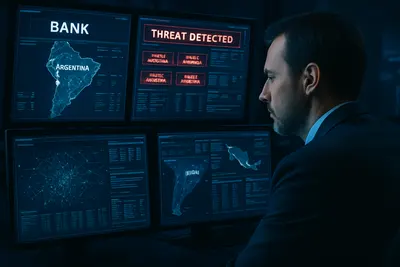
From fake celebrity voices and faces to banking scams built on vishing, artificial intelligence is already being used in concrete schemes in Argentina. At the same time, a practical gap remains: according to surveys cited by Turing Magazine and La Nación, there are still no formal protocols or widely deployed tools to detect deepfakes or AI-generated disinformation.
Artificial intelligence is already showing up in concrete fraud cases in Argentina, from bank vishing scams to schemes that combine synthetic voices and faces of public figures with fake seals from recognized media outlets to push bogus investments. At the same time, election authorities and the organizations consulted in different surveys still lack formal protocols to detect deepfakes or systematically monitor AI-generated disinformation.
What synthetic identity fraud is being seen?
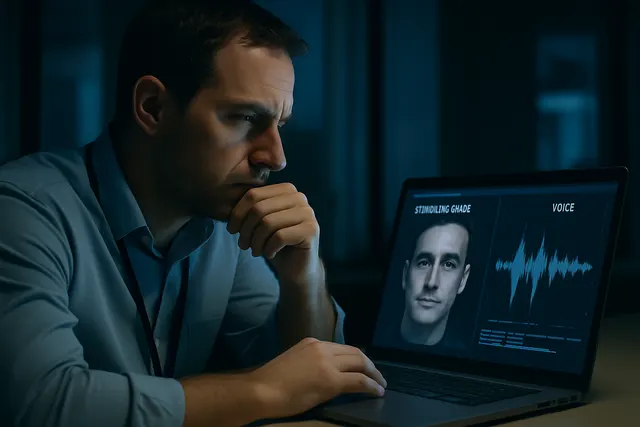
Infobae described a new fraud method in which criminals use artificial intelligence to mimic the voices and faces of celebrities. The deception is reinforced with visuals that appear to come from recognized media outlets, with the goal of promoting fake investments. According to that coverage, victims end up transferring money convinced the message is authentic, and in most cases they do not recover their losses.
The scheme fits a broader pattern of digital impersonation, where the value of the content no longer depends only on a convincing image or audio clip. It also depends on making that material look like it came from a trustworthy source. In this case, the mix of synthetic identity and media branding is designed to boost the fraud's credibility and speed up the transfer of funds.
How does bank vishing work?
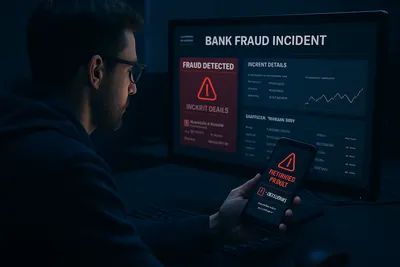
Mendoza Viva reported another bank scam in Argentina based on vishing. The scheme begins with the victim's home banking being blocked, then continues with a phone call in which criminals pose as the bank and ask for credentials. The coverage makes clear that the block may be real, but the supposed operator's identity is fake.
The official recommendations cited by that outlet say to hang up and contact the institution through official channels. They also warn not to give out usernames, passwords, PINs, tokens, or codes received by text message. In this type of case, identity theft happens in real time and exploits the urgency created by a blocked account.
What is happening with deepfake detection protocols?
In parallel, Turing Magazine cited an IDEA International report saying that election authorities in several Latin American countries, including Argentina, have adopted chatbots for citizen support. However, there are practically no formal protocols to detect deepfakes or to systematically monitor AI-generated disinformation in electoral processes.
La Nación, for its part, reported on a study by the Buenos Aires City Ombudsman's Office based on 912 students ages 12 to 19. Only 1% said they had been directly victimized by deepfakes, but 13% said they knew of cases in their school environment. The same report notes that cybersecurity and regulatory specialists warn about the lack of accessible tools and clear protocols to verify the authenticity of digital content, and that commercial detection solutions have not yet become widespread in the country.
That gap leaves users, schools and public agencies with few operational tools against manipulated content, both in fraud campaigns and in electoral and educational settings.
Sources
- Fraudes con identidades por IA: en Argentina crecen 66% los deepfakesmercado.com.ar· Revista Mercado
- IA sin reglas: amenaza electoral en Latinoaméricaturingmag.com· Turing Magazine
- El fraude de identidad se dispara en la Argentina y en el mundo: una solución que llega desde la IAfortuna.perfil.com· Fortuna (Perfil)
- El nuevo fraude que usa inteligencia artificial para imitar voces y rostros de famosos y vaciar cuentas en Argentinainfobae.com· Infobae
- Nueva modalidad de estafa bancaria en Argentina: el bloqueo del home banking como ganchomendozaviva.com· Mendoza Viva
- ¿Qué son los deepfakes y por qué la Justicia ya cambió las reglas de la prueba digital?elnotariado.com· El Notariado
- Una carrera permanente: los desafíos de combatir los deepfakes generados con IAlanacion.com.ar· La Nación
- Detección de cuentas mula e identidad sintética con IA en tiempo realfacephi.com· Facephi