Peru sets AI deadlines for key sectors
Peru’s AI law now has a rollout schedule for health, education, justice, security, and finance, according to a private guide.
Peru now has implementing rules for Law 31814 on artificial intelligence, and a private guide cited by Duotach says compliance would be phased across 2026, 2027 and 2028.
Peru’s Regulation of Law 31814 on artificial intelligence now sets an application framework for multiple sectors, and a private guide cited by Duotach outlines a phased compliance schedule that runs through 2026, 2027, and 2028.
What scope does the regulation have?
The Office of the President of the Council of Ministers of Peru published the regulation under the title "Learn about the Regulation of the Artificial Intelligence Law in Peru." In that context, the private guide obtained by Duotach interprets the rollout as being organized by sector and compliance date.
What is the sector-by-sector timeline?
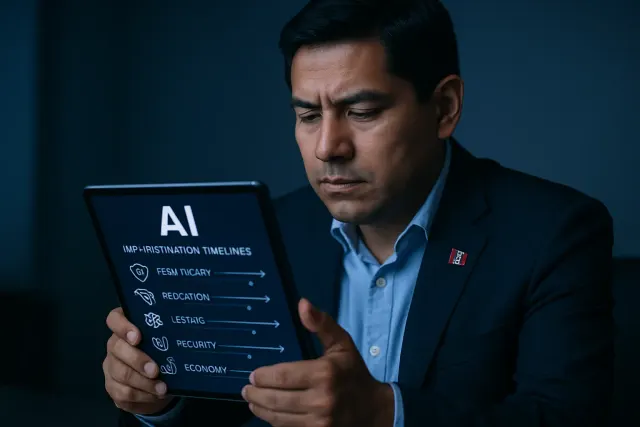
According to that same private guide, the first phase would cover health, education, justice, security, economy, and finance, with a compliance date of September 10, 2026. A second phase would include transportation, commerce, and labor, with a deadline of September 10, 2027.
The third stage, also according to the secondary source, would cover production, agriculture, energy, and mining, with a compliance date of September 10, 2028. That sequence leaves the regulation as a concrete reference point for sector-specific adjustment processes, although the details of the scheme are attributed to a private guide and not presented in the provided material as an official confirmation.
What other regulatory front does the material mention?
The compliance angle is not limited to artificial intelligence. The research material also points to the regulatory update of Data Protection Law 29733, another relevant front for companies and public entities operating in Peru.
With those two frameworks now approved, the regulatory picture for the country is more about obligations and adjustment deadlines than about new legislative proposals in cybersecurity or data protection currently moving through the process.
Sources
- Claude Code para empresas en Perú: guía 2026duotach.com· Duotach
- Conoce el Reglamento de la Ley de inteligencia artificial en el Perúgob.pe· Presidencia del Consejo de Ministros del Perú