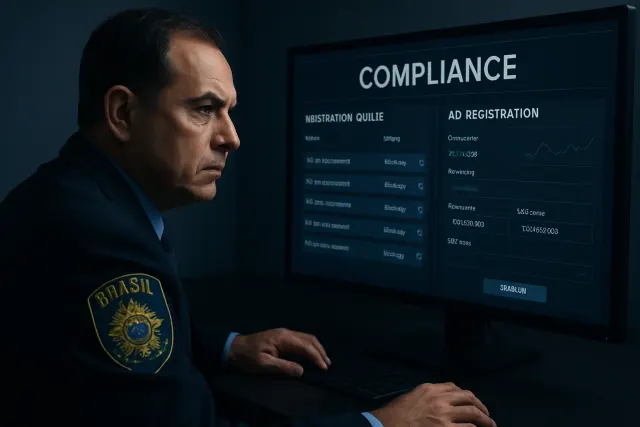
Brazil Sets New Rules for Digital Platforms
Decrees 12.975 and 12.976 tighten oversight of big tech, with removal duties, ad records and local presence requirements.
Brazil put Decrees 12.975 and 12.976 into effect on July 20, 2026, reshaping the liability regime for digital platforms, expanding takedown obligations for unlawful content and placing oversight of the new framework under the ANPD. The measures also create a specific regime for digital gender-based violence and require a local headquarters and legal representative in the country.
Decrees 12.975/2026 and 12.976/2026 took effect on Monday, July 20, 2026, directly changing compliance rules for digital platforms operating in Brazil. Among other measures, they require app providers to maintain a headquarters and a legal representative in the country, with authority to respond before courts, provide information to authorities and pay fines.
Decree 12.975/2026 amends the oversight chapter of the 2014 Marco Civil da Internet regulations and designates the Autoridade Nacional de Proteção de Dados, or ANPD, as the authority responsible for regulating, supervising and investigating the new liability regime set out in Article 19-A. Poder360 also reported that platforms had until Monday, July 20, to align with the new oversight and accountability rules.
Content Removal and Advertising
The new rules require platforms to take proactive action to remove content tied to racism, terrorism, child sexual exploitation, violence against women and suicide encouragement, without a court order or prior user complaint. Poder360’s coverage says the duty of care has been broadened, but companies still do not face general strict liability for third-party content and are liable when they fail to act against material considered criminal or unlawful under Brazilian law.
Decree 12.975/2026 also requires digital services to block paid ads and paid content that promote criminal or unlawful activity, and to keep records for one year of paid advertising and advertisers for enforcement purposes. It adds a diligence obligation to remove content considered deceptive, abusive or fraudulent advertising after notice from consumer protection bodies or the Advocacia-Geral da União when public policies are involved.
According to La Nación, the decree changes the Marco Civil da Internet and sets obligations and possible penalties for app providers in cases involving paid ads with messages that encourage violence and threats to democracy. In the same vein, one video report said no state body was created to decide what qualifies as disinformation, but rather the duty to identify and remove, on their own initiative, content already classified as criminal was reinforced.
Digital Gender Violence and the "falha sistêmica" Standard
Decree 12.976/2026 creates a parallel regime for digital gender-based violence and includes a two-hour window to remove non-consensual intimate images from digital platforms. Both decrees bring the system administration under the "falha sistêmica" standard previously defined by the Supreme Federal Court, which means platforms can face civil liability without a prior court order when they fail to take appropriate action against seriously unlawful content such as terrorism, child sexual exploitation, human trafficking or incitement to violence.
SMAB Advogados said the STF narrowed the effects of its ruling on platform civil liability and that the updated interpretation applies from August 5, 2025, except for continuous or ongoing acts. That adjusted standard provides for joint liability of the provider when, after receiving notice in cases of crime or unlawful acts, it fails to take the appropriate steps, unless it can show reasonable doubt about the illegality after a diligent and qualified review.
ANPD Consultation and Senate Pushback
[[The ANPD opened a specific call for submissions](/en/news/brazil-s-anpd-reviews-rules) to implement the new powers assigned by Decrees 12.975 and 12.976.](/en/news/brazil-tightens-anpd-oversight-platforms) The process allows citizens, companies, experts and organizations to submit comments through the Brasil Participativo platform. According to AdvemFoco, the agency wants to spell out transparency duties, support channels for users and non-users, and standards for diligent platform action in removing criminal content.
At the same time, the Senate received PDL 460/2026 with the explicit goal of annulling the effects of the presidential decree that changes the rules for internet providers and digital platforms. The proposal challenges the new monitoring and data-retention obligations imposed by the executive branch without a specific law approved by the National Congress, and describes Decrees 12.975/2026 and 12.976/2026 as potentially excessive regulations. It also argues that overturning them would help preserve users’ fundamental rights against expanded monitoring and data-retention duties imposed on platforms.
Sources
- STF ajusta tese sobre responsabilidade civil de plataformas digitaissmabr.com· SMAB Advogados
- ANPD abre consulta sobre novas regras para plataformas digitais: o que pode mudar para usuários e empresasadvemfoco.com.br· AdvemFoco
- Plataformas digitais têm novas regras a partir desta 2° feirapoder360.com.br· Poder360Unverified URL
- Plataformas digitais têm novas regras a partir desta segunda (20); Jess e Mehero comentamyoutube.com· YouTube / programa jornalístico
- Projeto de Lei n° 4752, de 2025www25.senado.leg.br· Senado Federal do Brasil
- PL 2/2026www25.senado.leg.br· Senado Federal do Brasil
- Brazil's New Platform Decrees Turn a Court Ruling Into a Standing Compliance Regimepeopleofinternet.com· People of Internet
- Entenda o que muda com os decretos de Lula para as big techspoder360.com.br· Poder360
- Plataformas digitais têm novas regras a partir desta 2ª feirapoder360.com.br· Poder360
- Brasil: el Gobierno implementa medidas contra las big techlanacion.com.ar· La Nación
- PDL 460/2026www25.senado.leg.br· Senado Federal do Brasil