Brazil Central Bank tightens crypto reporting rules
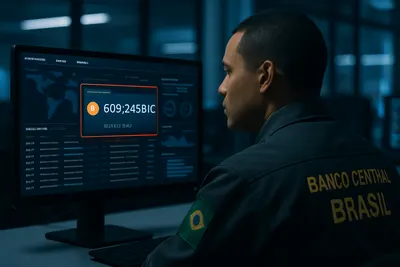
Brazil’s Central Bank set new reporting rules for crypto with self-custody wallets, effective Oct. 1, 2026.
Brazil’s Central Bank published Resolutions BCB 588 and 589, changing the rules for virtual asset providers and anti-money laundering controls. Starting Oct. 1, 2026, firms must seek authorization and report transfers of $10,000 or more involving self-custody wallets to Coaf.
Brazil’s Central Bank has published Resolutions BCB No. 588 and No. 589, changing the rules for virtual asset service providers and for anti-money laundering and counter-terrorism financing controls. Resolution 588 requires reporting virtual asset transfers valued at the equivalent of $10,000 or more when self-custody wallets are involved. The new rules take effect on Oct. 1, 2026.
What does Resolution BCB No. 588 require?
Resolution BCB No. 588 requires reporting virtual asset transfers of $10,000 or more when self-custody wallets are involved. According to Migalhas, that obligation is described as an automatic report that does not depend on prior suspicion about the transaction.
Exame provided a specific currency reference, placing that threshold at about R$51,800, based on the exchange rate used by the outlet. The measure focuses directly on movements that pass through self-custodied wallets, a point Brazil’s Central Bank placed at the center of the new framework.
What changes for virtual asset service providers?
Virtual asset service companies already operating in Brazil must formally submit their authorization request to the Central Bank by Oct. 1, 2026, when the new rules take effect. Resolution 589 also expands the information those firms must send for supervisory purposes.
Times Brasil said the specific rules for that reporting take effect on Jan. 1, 2027. In parallel, SpaceMoney and Ledware said the change in how counterparties are treated takes effect on Oct. 1, 2026, although the restriction on operating with unauthorized providers would have a later specific date, Nov. 6, 2026.
What is the scope of the changes to counterparties and supervision?
Resolution BCB No. 589 expands the flow of information to the Central Bank and changes how counterparties are treated in virtual asset transactions. The adjustment adds another layer of supervision over providers already operating in the Brazilian market.
SpaceMoney reported, without official confirmation in the material available, that reports to Coaf for transfers involving self-custody wallets should be made by the next business day. Because that point is attributed to that outlet and could not be verified in the regulatory material provided, it should be read as a journalistic interpretation, not as a definitive wording of the rule.
Coverage published by Agência Brasil and Times Brasil agrees that the focus of the resolutions is to strengthen control over crypto transfers, organize market access for providers, and broaden state oversight of virtual asset activity in Brazil.
Sources
- BC altera regras para criptoativos e amplia comunicações ao Coafcnnbrasil.com.br· CNN Brasil
- 'Cripto' acima de US$ 10 mil será informada ao Coaftimesbrasil.com.br· Times Brasil
- Ativos virtuais: novas regras da Resolução BCB 589ledware.com.br· Ledware
- BCB amplia regras para carteiras autocustodiadasspacemoney.com.br· SpaceMoney
- Autocustódia de cripto entra no radar do Coaf em outubrospacemoney.com.br· SpaceMoney
- Advogado analisa novas regras do BC para controle de ativos virtuaismigalhas.com.br· Migalhas
- BC determina aviso ao Coaf de transferências cripto com autocustódia a partir de US$ 10 milexame.com· Exame
- BC amplia controle sobre criptomoedas e mira carteiras própriasagenciabrasil.ebc.com.br· Agência Brasil