Argentina: WhatsApp bank scams are rising
Bank scams on WhatsApp, fake sites and identity theft are spreading in Argentina. The BCRA, Catamarca and CABA have issued alerts.
Recent digital bank fraud in Argentina is increasingly leaning on WhatsApp, search engines and identity theft. That is now joined by BCRA alerts over a new scam using images of the agency’s officials, more than 500 complaints in Catamarca, and more than 200 complaints a month in CABA.
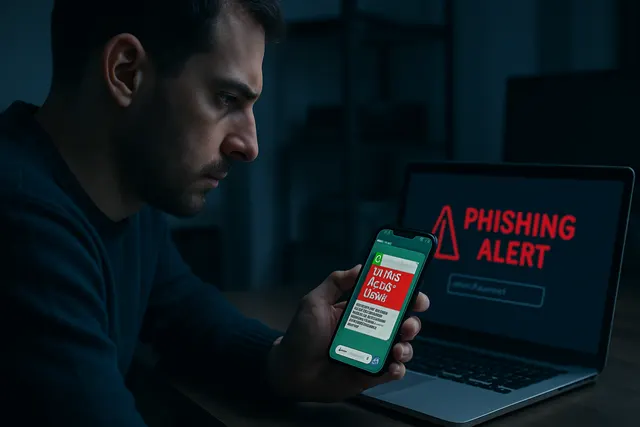
In Argentina, a growing share of recent digital bank fraud is being carried out through WhatsApp, where criminals pose as bank or government representatives to steal personal data and money. Complaints are mounting across several jurisdictions, while warnings have multiplied from the BCRA, Catamarca and CABA.
How are recent bank scams being carried out?
Canal 26 reported that many recent bank scams are being run through WhatsApp, with attackers taking on the identities of financial institutions or public agencies. In that same report, a study by CertiSur and D’Alessio IROL was cited as placing phishing as the most widely used method for online fraud, with identity theft serving as the operational base.
The deception relies on channels users tend to trust. Infobae reported that the Central Bank warned about a new online scam in which criminals use the identity or image of officials from the institution itself to promote fraudulent investments and empty bank accounts. According to that warning, they also use manipulated videos and communications by email, WhatsApp or SMS.
In some cases, the attackers ask victims to install apps under the pretext of verifying their identity or fixing an account problem. If the app was already installed or personal or banking data was shared, Infobae reported that the recommendation is to contact the bank immediately and file a report with UFECI at denunciasufeci@mpf.gob.ar.
What do the complaints in CABA and Catamarca show?
The problem is not limited to isolated incidents and is already showing up in official statistics and local warnings. Página/12 reported that CABA received more than 200 cyberfraud complaints per month so far in 2026, while Catamarca’s Cybercrime Division warned about fake 0810 phone numbers appearing in internet search results.
According to the Specialized Cybercrime Investigation Prosecutor’s Office No. 7, more than 500 complaints for virtual scams had already been filed so far in 2026. That volume underscores the spread of the problem across multiple jurisdictions and confirms that the mix of WhatsApp, search engines and identity theft has already produced a high number of cases.
Channel 26 also showed that courts have been examining partial responsibility by banks in frauds carried out through WhatsApp. Those rulings suggest a growing judicial response to damage tied to social engineering and to schemes that rely more on user trust than on complex technical failures.
In the material reviewed, the common pattern across these scams is identity theft, fake search results, WhatsApp, SMS and email, a combination that has already generated a high volume of complaints in several jurisdictions in the country.
Sources
- Alerta por una nueva estafa virtual: cómo es el engaño que usa la imagen del Banco Central para robar ahorrosinfobae.com· Infobae
- Alarma en CABA por el incremento de ciberfraudes: en lo que va del 2026 ingresaron más de 200 denuncias por mespagina12.com.ar· Página/12
- Estafas virtuales en Catamarca: jubilados y familias quedan expuestos ante nuevas maniobras digitaleselaconquija.com· El Aconquija
- Le vaciaron la cuenta por WhatsApp, demandó al banco y la Justicia lo responsabilizó de manera parcialcanal26.com· Canal 26
- Si buscás tu banco en Google y cometés estos errores te pueden vaciar la cuenta en minutosiprofesional.com· iProfesional