Paraguay reviews its cybersecurity law
Paraguay’s Chamber of Deputies called for a working group after objections to major changes in the cybersecurity bill.
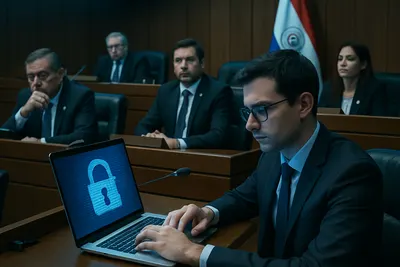
A public hearing in Paraguay’s Chamber of Deputies on the "Cybersecurity Law in Paraguay" ended with a proposal to form a working group to review the text. The debate stalled after participants said the version presented had changed substantially from the one already reviewed.
A public hearing in Paraguay’s Chamber of Deputies on the "Cybersecurity Law in Paraguay" ended with a proposal to form a working group to review the text. The move came after several participants warned that the version presented had changed substantially from the one already reviewed. The proposal was put forward by lawmakers Rocío Vallejo and Raúl Benítez.
What happened to the bill?
The discussion remained open, with no final ruling on the article-by-article text, after the version under review drew objections over substantial changes. According to Paraguay Noticias, that led lawmakers to propose a parliamentary working group to examine the text in greater detail.
What is being debated alongside Law 7593/2025?
Law No. 7593 has already been enacted, but its practical application is still pending, according to the sources consulted. TEDIC said security breaches must be reported within 72 hours, and that transferring data to third parties or abroad in violation of the law is a serious offense. The group also said, based on sources it has not confirmed, that nearly a year after enactment no public draft of the regulations was known, and that the minister had promised to present it "in the coming months" for civil society input.
The Asuncion Times linked that delay to a specific case involving Ueno Bank and said affected people still cannot invoke the law while the implementing regulations and the future data protection authority remain pending. Diario HOY, for its part, said the law treats certain biometric data as sensitive, including facial images, iris recognition and fingerprint data, and requires technical and organizational safeguards against unauthorized access, loss or unlawful processing. That outlet placed the law’s application date in November 2027.
What political objection has emerged around the law?
An ABC Color editorial argued that article 24 of Law 7593/2025 could become a systematic obstacle to accessing public information on officials, contracts, salaries and the use of state resources. The publication framed that as an editorial assessment, not as a legally confirmed effect.
What remains before the law can fully operate?
TEDIC said the unresolved debate includes participatory rulemaking and a supervisory authority with real independence guarantees. Meanwhile, the sources reviewed show the law still has not entered into operational force, while the regulations and the institutional enforcement structure remain undefined.
Sources
- Audiencia sobre “Ley de ciberseguridad” termina en otra mesa de trabajopynoticias.es· Paraguay Noticias
- Three Million Faces And Fingerprints: What Happens To Ueno Bank’s Data Now?asunciontimes.com· The Asuncion Times
- Rostros y huellas en riesgo: alertan sobre la exposición de datos biométricoshoy.com.py· Diario HOY
- Caso UENO: biometría, datos personales y la deuda del Estado paraguayotedic.org· TEDIC
- El Legislativo no puede lavarse las manosabc.com.py· ABC Color
- TEDIC participará en el IGFpy10tedic.org· TEDIC
- The UENO Case: Biometrics, Personal Data, and the Paraguayan State’s Debttedic.org· TEDIC