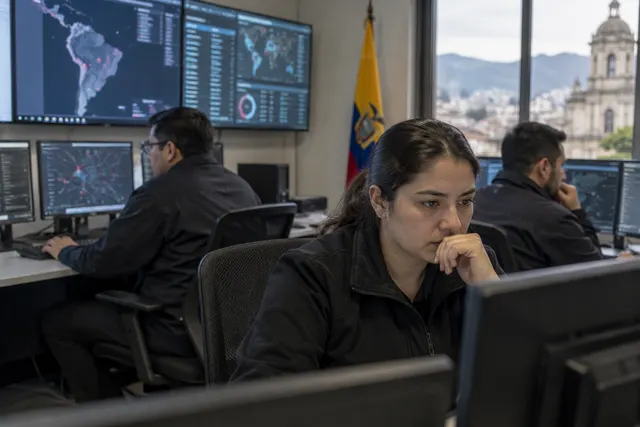
EU-LAC Cyber-SHIELD to link SOCs in Latin America
The project will connect SOCs across Latin America and the Caribbean to detect incidents, share information and align regional response.
The EU-LAC Cyber-SHIELD project plans to deploy and interconnect Security Operations Centres across Latin America and the Caribbean to improve cyber incident detection, share technical information and align regional readiness with European Union standards.
The EU-LAC Cyber-SHIELD project plans to deploy and connect Security Operations Centres across Latin America and the Caribbean to strengthen cyber incident detection, share incident information and carry out technical analysis. The initiative is scheduled to run from September 1, 2026, through August 31, 2029.
What does EU-LAC Cyber-SHIELD aim to do?
EU-LAC Cyber-SHIELD seeks to improve regional incident response and preparedness by connecting SOCs through a technical information-sharing framework among Latin American and Caribbean countries. According to FIAP/FIIAPP, the project also aims to align those processes with European Union standards and international best practices.
The initiative is not presented as a standalone effort, but as a deployment designed to strengthen operational cooperation among specialized centers. Based on information published by FIAP/FIIAPP, the focus is on early detection, incident analysis and regional coordination.
What is the project timeline and scope?
The project is set to run from September 1, 2026, to August 31, 2029, according to FIAP/FIIAPP. That gives it a three-year window to implement the interconnection of the centers and adjust regional preparedness to the planned criteria.
At the same time, the available material places the initiative within a broader push for standardization and cooperation with Europe. The explicit reference to European Union standards and international best practices defines the technical framework the program will follow.
How does this announcement fit the regional context?
The announcement comes at a time when several countries in the region still have incomplete frameworks for regulating artificial intelligence and strengthening data protection and cybersecurity safeguards. An analysis of Argentina notes that its data protection law dates to 2000 and that the country lacks a comprehensive AI-specific regulation, while also calling for stronger cybersecurity standards and breach notification rules for public agencies.
At the same time, a comparative Openlayer guide identifies policy progress in Colombia, Chile and Mexico, although it says those frameworks still do not have mandatory implementation dates, according to the published information. UPI reported that the fourth Latin American Artificial Intelligence Index, prepared by CENIA and ECLAC, assessed 20 countries, with Chile in first place, followed by Brazil and Uruguay.
That same review found that 11 of the 20 countries now include AI content in school curricula, up from two in 2024, and that 85% have national AI strategies or are developing them. Only Brazil and Colombia explicitly budget for their implementation.
What does the cyber campaign attributed to Lazarus show?
TechRadar Pro reported that Operation FlashHole affected at least three South Korean organizations in the software, construction and wired communications equipment manufacturing sectors, and that the campaign had been active since at least July 2025. In that coverage, Kaspersky said the attackers may have used AI to tailor fraudulent websites to specific targets, although that point was presented as a hypothesis.
Back End News described fake portfolio and resume pages, including a seemingly AI-generated photograph, also without confirmed attribution. Additional TechRadar coverage said an updated version of LPEClient used ML-KEM-1024 to protect the channel used to download malware, a technical detail that broadens the focus beyond AI use.
The case was observed in Asia and does not confirm any Latin American victims.
Sources
- EU-LAC Cyber-SHIELDfiap.gob.es· FIAP/FIIAPP
- What Argentina Needs to Fulfill its AI Ambitionsamericasquarterly.org· Americas Quarterly
- Country-by-Country AI Regulation Guide (Oct 2026)openlayer.com· Openlayer
- Hacking group Lazarus uses AI lures, post-quantum encryption in attacksbackendnews.net· Back End News
- Security experts warn North Korean hackers aren't just using AI in their new campaigns, but also 'post-quantum' encryptiontechradar.com· TechRadar Pro
- Artificial intelligence and the erosion of human agencyupi.com· UPIUnverified URL