Einstein Hospital Confirms Patient Data Access
Einstein Hospital confirmed unauthorized access to patient databases and said it will notify affected patients as its systems remained operational.
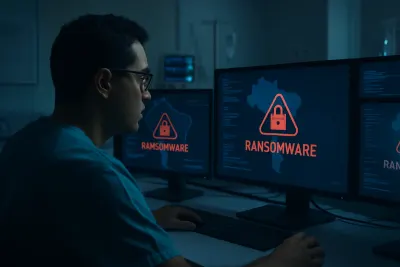
Einstein Hospital confirmed that part of its patient databases was accessed and obtained by unauthorized parties. The institution said its care systems, patient service platforms and electronic medical records remained operational while it investigated and notified possible affected parties.
Albert Einstein Israelite Hospital confirmed that part of its patient databases was accessed and obtained by unauthorized parties. The institution said its care systems, patient service platforms and electronic medical records remained operational while it notified the case to Brazil's Federal Police and the National Data Protection Authority.
What did Einstein confirm about the incident?
Einstein confirmed that there was improper access to part of its patient databases and that unauthorized parties obtained that information. According to TI Inside, the hospital also said potentially affected data subjects will be notified individually by email.
The institution also said, according to that same report, that it had not identified evidence of public disclosure, leakage, or misuse of the data, although it was still investigating the scope of the access.
What is known about the investigation?
Brazil's Federal Police carried out Operation Insidious in the context of an investigation opened after a health care institution reported the extraction of sensitive data followed by a payment demand. That connection appears in Minuto da Segurança's reporting, but it has not been independently confirmed as server encryption or as an interruption of hospital services.
Minuto da Segurança links the investigation to the Einstein Hospital case and to a possible extortion scenario, although it presents those points as attribution from the source rather than as independently verified facts in the available material.
What makes this case different from confirmed ransomware?
The available material draws a distinction between improper access and a formal confirmation of ransomware. In Einstein's case, what has been verified is the unauthorized obtaining of data and the continued operation of systems. By contrast, SOC Prime describes Dire Wolf as a double extortion ransomware family with specific technical capabilities.
SOC Prime says Dire Wolf uses a Go-based encryptor packed with UPX, employs ChaCha20, and can remove shadow copies and disable Windows recovery. That description applies to the behavior of the ransomware family, not to a confirmed attribution of the Einstein incident to that group.
What does the observatory say about the region?
ACSec's observatory on Dire Wolf and Diario Financiero's reference point to a regional context in which the health sector and critical infrastructure appear among ransomware victims in Latin America. That material does not change what was reported about Einstein, but it does place the case within a broader series of incidents affecting organizations in the region.
The available documentation allows two layers to be separated: on one hand, the institution's confirmation of data access at Einstein, and on the other, the existence of active ransomware families in the region with double extortion techniques, such as Dire Wolf.
Sources
- DireWolf — víctimas divulgadasransomware.academia-ciberseguridad.com· ACSec Observatorio Ransomware
- Hospital Einstein confirma acesso indevido a dados médicosminutodaseguranca.blog.br· Minuto da Segurança
- Casi un tercio de las víctimas de ransomware en Chile y América Latina corresponden a infraestructura críticadf.cl· Diario Financiero
- Einstein confirma ataque cibernético com acesso a dados pessoais e médicos de pacientestiinside.com.br· TI Inside
- Dire Wolf Ransomware: Testes de Detecção e Defesasocprime.com· SOC Prime
- Ataque hacker ao Einstein expõe riscos de governança e responsabilidade sobre dados de pacientes, alerta Instituto Empresamonitormercantil.com.br· Monitor MercantilUnverified URL
- Tras filtración en el Hospital Clínico de la U. de Chile: Especialista fija cinco preguntas para evaluar la ciberseguridad de centros de saludadnradio.cl· ADN Radio